

যদিও আমি মনে করি ঋণমুক্ত স্নাতক শিক্ষা শেষ করা সম্পূর্ণরূপে সম্ভব, যা চিকিত্সক, ডেন্টিস্ট, অ্যাটর্নি এবং অন্যান্য উচ্চ-আয়ের পেশাদারদের জন্য সর্বদা কম এবং কম হয়ে যাচ্ছে। এই দীর্ঘ পোস্টটি ছাত্র লোন মাফ প্রোগ্রাম থেকে ছাত্র ঋণ পুনঃঅর্থায়নের সেরা ডিলগুলির জন্য সেই কষ্টকর ছাত্র ঋণগুলি পরিচালনা করার বিষয়ে আপনার যা জানা দরকার তা কভার করতে চলেছে। এই স্টুডেন্ট লোন 101 বিবেচনা করুন। আমি প্রশিক্ষণের স্তর অনুসারে পোস্টটি ভাগ করেছি, যা আশা করি আপনাকে সেই অংশগুলি এড়িয়ে যাওয়ার অনুমতি দেবে যা আপনার জন্য প্রযোজ্য। এই পোস্টটি মেডিকেল স্কুল ঋণের বোঝার নিচে যারা সংগ্রাম করছে তাদের জন্য কিছু আশা আনুক।
স্টুডেন্ট লোন হল ছাত্রদের তাদের শিক্ষা এবং সংশ্লিষ্ট জীবনযাত্রার খরচের জন্য জারি করা ঋণ। যেমন, অন্য কোনো উদ্দেশ্যে এগুলি প্রাপ্ত করা বা ব্যবহার করা প্রতারণামূলক বলে বিবেচিত হয়৷ একটি বন্ধকী বা স্বয়ংক্রিয় ঋণের বিপরীতে, এই ঋণগুলি ফোরক্লোজ করা যাবে না। টাকা না দিলে কেউ ক্র্যানিওটমি করতে আসবে না। যাইহোক, সেই সত্যের বিনিময়ে, তাদের দুটি শর্ত রয়েছে যা তাদের বরং কঠিন করে তোলে:
স্কুলের জন্য আপনার প্রয়োজনের চেয়ে বেশি টাকা ধার করবেন না। কিছু আর্থিক সহায়তা অফিস জীবনযাত্রার ব্যয় মেটানোর জন্য অতিরিক্ত ঋণ নেওয়ার সুপারিশ করবে। আপনার জীবনযাত্রার ব্যয় কভার করার জন্য প্রয়োজনীয় ন্যূনতম পরিমাণ নেওয়ার চেষ্টা করুন। কেউ কেউ তাদের ঋণের উপর একটি বিলাসবহুল জীবনযাপন করার জন্য প্রয়োজনের চেয়ে বেশি ধার নিতে পারে। এটি একটি ভাল ধারণা না. স্টুডেন্ট লোন নিয়ে কীভাবে বাঁচতে হয় সে সম্পর্কে আরও জানতে, মেডিকেল স্কুলে ঋণ ব্যবহারের সঠিক উপায় দেখুন।
আপনার স্টুডেন্ট লোন নিয়ে আপনি যে সিদ্ধান্তগুলি নেন তা সহজেই দশ বা এমনকি কয়েক হাজার ডলার মূল্যের হতে পারে। তাদের পরিচালনা, তবে, দ্রুত পরিবর্তনশীল ফেডারেল ঋণ পরিশোধের প্রোগ্রামগুলির সাথে প্রতি বছর আরও জটিল হয়ে উঠছে। আমি আপনাকে এই পোস্টটি একটি শেখার সরঞ্জাম এবং গাইড হিসাবে ব্যবহার করার পরামর্শ দিই কিন্তু আপনার অনন্য পরিস্থিতির জন্য একটি পরিকল্পনা করতে আমাদের সুপারিশকৃত ছাত্র ঋণ উপদেষ্টাদের একজনের সাথে যান। তারা এই প্রোগ্রামগুলি ভিতরে এবং বাইরে জানে এবং আপনার সর্বাধিক অর্থ সঞ্চয় করার জন্য সর্বশেষ তথ্যের সাথে আপ টু ডেট রয়েছে৷
ফেডারেল স্টুডেন্ট এইড (FASFA) ফর্মের জন্য বিনামূল্যের আবেদন পূরণ করে ফেডারেল স্টুডেন্ট লোনের জন্য আবেদন করুন। আপনার ফলাফলগুলি আপনার আর্থিক সহায়তার অফারকে নির্দেশ করবে৷
৷স্টুডেন্ট লোন প্রাপ্তির আগে আপনাকে প্রবেশদ্বার কাউন্সেলিং পেতে হবে যাতে আপনি ঋণ পরিশোধের বাধ্যবাধকতা বুঝতে পারেন এবং একটি মাস্টার প্রমিসরি নোটে স্বাক্ষর করেন, যা একটি বাধ্যতামূলক চুক্তি যেখানে আপনি ঋণের শর্তাবলীতে সম্মত হন। অতিরিক্ত বিবরণের জন্য আপনার স্কুলের আর্থিক সহায়তা অফিসে যোগাযোগ করুন।
একটি প্রাইভেট স্টুডেন্ট লোনের জন্য আবেদন করার প্রক্রিয়া পরিবর্তিত হতে পারে তবে বেশিরভাগ প্রাইভেট লোন অ্যাপ্লিকেশন তাদের ওয়েবসাইটের মাধ্যমে অ্যাক্সেসযোগ্য।
উভয় ফেডারেল এবং প্রাইভেট স্টুডেন্ট লোনকে সাধারণত বন্ধকী বা গাড়ির ঋণের মতো অন্যান্য কিস্তি ঋণের মতোই বিবেচনা করা হয়। আপনি যদি সময়মতো প্রতিটি অর্থ প্রদান করেন তবে এটি আপনার ক্রেডিট ইতিহাস তৈরি করতে পারে এবং এমনকি আপনার ক্রেডিট স্কোর বাড়িয়ে তুলতে পারে। আপনি যদি অর্থপ্রদানে অসন্তুষ্ট হন বা আপনার ছাত্র ঋণে ডিফল্ট হন তবে আপনার ক্রেডিট স্কোর একটি আঘাত নিতে পারে। আপনি অপরাধ বা ডিফল্টের কাছাকাছি হওয়ার আগে, নিশ্চিত করুন যে আপনি অর্থপ্রদানের সামর্থ্য নিশ্চিত করার জন্য একটি উপযুক্ত আয়-চালিত পরিশোধ (IDR) পরিকল্পনায় নথিভুক্ত হয়েছেন।
বৃহৎ স্টুডেন্ট লোন সহ ডাক্তাররা একটি বাড়ি কিনতে চান তাদের উচ্চ ঋণ থেকে আয় অনুপাতের কারণে একটি বন্ধকী সুরক্ষিত করা কঠিন হতে পারে। বিবেচনা করার একটি বিকল্প হল একটি চিকিত্সক বন্ধক ঋণ ব্যবহার করা (ডাক্তার বন্ধক হিসাবেও পরিচিত)। চিকিত্সক মর্টগেজ লোন হল ঋণদানের প্রোগ্রাম যা উচ্চ-আয়ের ঋণগ্রহীতাদের উচ্চ ছাত্র ঋণ ঋণ-টু-আয় অনুপাতের সাথে বিশেষ চিকিত্সা দেয়। চিকিত্সক বন্ধকগুলি প্রায়শই দাঁতের ডাক্তার, পশুচিকিত্সক, CRNA, PA, অ্যাটর্নি ইত্যাদির কাছেও পাওয়া যায়৷
আরো তথ্য এখানে:
চিকিত্সক বন্ধক ঋণ
স্টুডেন্ট লোন দুটি প্রধান প্রকারে বিভক্ত—ফেডারেল লোন (সরাসরি ঋণও বলা হয়) এবং ব্যক্তিগত ঋণ .
আপনার শিক্ষার জন্য কীভাবে ধার নেওয়া যায় সে বিষয়ে সিদ্ধান্ত নেওয়ার সময়, প্রাইভেট করার আগে ফেডারেল বের করুন। ফেডারেল ঋণ প্রাথমিকভাবে কম সুদের হার অফার করতে পারে এবং প্রচুর ফেডারেল সুরক্ষা প্রাইভেট স্টুডেন্ট লোন অফার করে না। ব্যক্তিগত ঋণ আয়-চালিত পরিশোধ, পাবলিক সার্ভিস লোন ক্ষমা, বা IDR ক্ষমা প্রদান করে না। ফেডারেল স্টুডেন্ট লোনের বিপরীতে, যেগুলি সর্বদা মৃত্যু বা সম্পূর্ণ অক্ষমতার পরে ডিসচার্জ করা হয়, প্রাইভেট স্টুডেন্ট লোন ডিসচার্জ নীতিগুলি কম প্রমিত এবং ঋণদাতা অনুসারে পরিবর্তিত হয়।
ফেডারেল ঋণের সাধারণত কম হার থাকে এবং বিশেষ আয়-ভিত্তিক অর্থপ্রদান পরিকল্পনা এবং ক্ষমার পরিকল্পনাও থাকে। সাধারণ নিয়ম হল যে কোনও ব্যক্তিগত ঋণ নেওয়ার আগে আপনি ফেডারেল লোন প্রোগ্রামগুলিতে কী ধার নিতে পারেন তা সর্বাধিক করে নেওয়া৷
যাইহোক, কিছু বিদেশী মেডিকেল স্কুল ফেডারেল ঋণের জন্য যোগ্যতা অর্জন করে এবং কিছু করে না। একটি বিদেশী মেডিকেল স্কুলে আবেদন এবং নথিভুক্ত করার আগে এই পৃষ্ঠায় এই তালিকার সাথে পরামর্শ করতে ভুলবেন না। ক্যারিবিয়ান মেডিকেল স্কুলগুলি ফেডারেল লোনের জন্য যোগ্যতা অর্জন না করার জন্য কুখ্যাত, যদিও সর্বোচ্চ ম্যাচ রেট সহ (সেন্ট জর্জেস, সাবা, আমেরিকান ইউনিভার্সিটি অফ দ্য ক্যারিবিয়ান, রস) যোগ্যতা অর্জনের প্রবণতা রয়েছে।
ফেডারেল ছাত্র ঋণ একত্রিত করা যেতে পারে. এই প্রক্রিয়ায়, অসংখ্য ঋণ একত্রে একটি ঋণে একত্রিত করা হয় এবং সুদের হার গড় করা হয় এবং তারপর একটি পয়েন্টের নিকটতম 1/8 তম পর্যন্ত বৃত্তাকার করা হয়। এটি পুনঃঅর্থায়নের প্রক্রিয়া থেকে আলাদা (শুধুমাত্র ব্যক্তিগত ঋণদাতাদের সাথে উপলব্ধ) যেখানে সুদের হার সাধারণত কম হয়৷
যোগ্যতা প্রয়োজনীয়তা অন্তর্ভুক্ত:
ভর্তুকিযুক্ত ঋণ হল সেই ঋণ যা শিক্ষা বিভাগ আপনার জন্য স্নাতক স্কুলে পড়ার জন্য সুদ প্রদান করবে। যোগ্য ঋণগ্রহীতারা আর্থিক প্রয়োজন প্রদর্শন করবে এবং স্কুলে থাকাকালীন অর্জিত সুদ দিতে হবে না। স্নাতক এবং পেশাদার ডিগ্রি প্রোগ্রাম আর ভর্তুকিযুক্ত ঋণ অফার করে না। অভর্তুকিহীন ঋণগুলি আপনি গ্রহণ করার সাথে সাথেই সুদ জমা করতে শুরু করে। প্লাস লোন (গ্রাড বা অভিভাবক) হল অবৈতনিক ঋণ। ভর্তুকিহীন ঋণ নেওয়ার আগে আপনি যেকোন ভর্তুকিযুক্ত বিকল্পগুলি শেষ করতে চাইবেন৷
স্টাফোর্ড লোন ডাইরেক্ট স্টাফোর্ড লোন নামেও পরিচিত এবং উইলিয়াম ডি. ফোর্ড ফেডারেল ডাইরেক্ট লোন (ডাইরেক্ট লোন) প্রোগ্রাম থেকে আসে। ডাইরেক্ট স্টাফোর্ড লোন হল সবচেয়ে সাধারণ ছাত্র ঋণ এবং বর্তমানে উচ্চ শিক্ষার খরচ মেটানোর জন্য জারি করা হচ্ছে।
স্টাফোর্ড ঋণের 3টি বিভাগ রয়েছে:
একত্রীকরণের আগে, স্টাফোর্ড লোন এর জন্য যোগ্য:
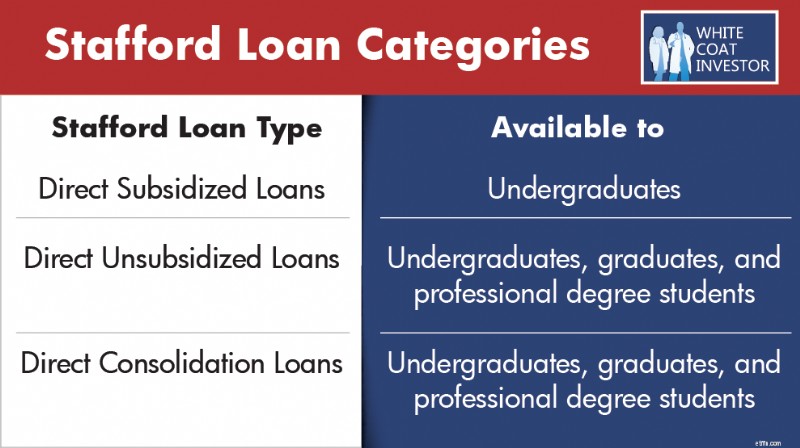
প্লাস লোন, গ্র্যাড প্লাস লোন নামেও পরিচিত, সরাসরি এবং FFEL লোন প্রোগ্রাম থেকে আসে। শিক্ষকতা কভার করার জন্য স্টাফোর্ড লোন শেষ করার পরে ঋণগ্রহীতাদের এই ঋণগুলি জারি করা হয়। Grad PLUS লোন বন্ধ করা হবে যারা 30 জুন, 2026 এর পর প্রোগ্রামের জন্য ধার নেওয়া শুরু করবেন তাদের জন্য।
একত্রীকরণের আগে, সরাসরি প্লাস ঋণের জন্য যোগ্য :
একত্রীকরণের আগে, FFEL PLUS ঋণের জন্য যোগ্য :
একত্রীকরণের পরে, FFEL PLUS ঋণগুলি এর জন্য যোগ্য:৷
পিতামাতা প্লাস ঋণ তাদের সন্তানের শিক্ষার অর্থায়নের জন্য পিতামাতাকে জারি করা হয়। এগুলি স্নাতক, স্নাতক এবং পেশাদার ডিগ্রি শিক্ষার্থীদের জন্য দেওয়া হয়। পূর্বে, প্যারেন্ট প্লাস ঋণের জন্য ঋণ নেওয়ার কোনো সীমা ছিল না। যাইহোক, OBBBA প্রতি বছর $20,000 পর্যন্ত শিশু প্রতি $65,000 এর একটি ধারের ক্যাপ প্রয়োগ করেছে।
একত্রীকরণের আগে, অভিভাবক প্লাস ঋণ শুধুমাত্র এর জন্য যোগ্য:
একত্রীকরণের পরে, অভিভাবক প্লাস ঋণ এর জন্য যোগ্য:
অনুগ্রহ করে মনে রাখবেন OBBBA-এর প্রতি, IDR প্রোগ্রামগুলির জন্য যোগ্য থাকার জন্য 1 জুলাই, 2026-এর আগে অভিভাবক PLUS ঋণগুলিকে একত্রিত করতে হবে। এর অর্থ হল, আপনি যদি কোনো IDR পরিকল্পনার জন্য যোগ্য হতে চান তবে আপনার এই বছর যত তাড়াতাড়ি সম্ভব আপনার অভিভাবক প্লাস ঋণ একত্রিত করা উচিত। সেই তারিখের পরে একত্রিত বা ধার করা ঋণ বর্তমানে কোনো IDR পরিকল্পনার জন্য যোগ্য হবে না। ইনকাম-কনটিনজেন্ট রিপেমেন্ট (ICR) প্ল্যান ঐতিহাসিকভাবে একমাত্র IDR প্ল্যান যা পিতামাতা ঋণগ্রহীতাদের জন্য উপলব্ধ। অতীতে, ঋণগ্রহীতাদের আরও উদার IDR পরিকল্পনাগুলি অ্যাক্সেস করার জন্য প্রায়ই জটিল এবং কষ্টকর ডবল-একত্রীকরণ প্রক্রিয়াটি নেভিগেট করতে হয়েছিল। এখন, 1 জুলাই, 2026 এর আগে অভিভাবক PLUS ঋণগুলি যতদিন একত্রিত হয়েছে, তারা ICR প্ল্যানে একটি পেমেন্ট করার পরে, তারা আরও উদার আয়-ভিত্তিক পরিশোধের পরিকল্পনার জন্য যোগ্য হয়ে উঠবে। দ্বৈত একত্রীকরণের ছিদ্রপথ আর পিতামাতার ঋণগ্রহীতাদের জন্য একটি ফ্যাক্টর নয়৷
৷2010 সালের আগে, ফ্যামিলি ফেডারেল এডুকেশন লোন (FFEL) প্রোগ্রাম ফেডারেল ছাত্র ঋণের প্রধান উৎস ছিল। প্রোগ্রামটি 2010 সালে শেষ হয়েছে এবং সমস্ত ঋণ এখন উপরে উল্লেখিত সরাসরি ঋণ প্রোগ্রামের অধীনে জারি করা হয়।
একত্রীকরণের আগে, FFEL ঋণ এর জন্য যোগ্য:
একত্রীকরণের পরে, FFEL ঋণ এর জন্য যোগ্য:
ফেডারেল পারকিন্স স্টুডেন্ট লোন প্রোগ্রামটি একটি নির্দিষ্ট আর্থিক প্রয়োজনের শিক্ষার্থীদের কলেজের জন্য অর্থ প্রদানের জন্য তৈরি করা হয়েছিল। প্রোগ্রামটি 30 সেপ্টেম্বর, 2017 এ শেষ হয়েছে .
পারকিন্স লোনগুলি একত্রিত না হওয়া পর্যন্ত আয়-চালিত পরিশোধ (IDR) বা পাবলিক সার্ভিস লোন ক্ষমা (PSLF) এর মতো ফেডারেল প্রোগ্রামগুলির জন্য যোগ্য নয়৷
একত্রীকরণের পরে, পারকিন্স ঋণ এর জন্য যোগ্য:
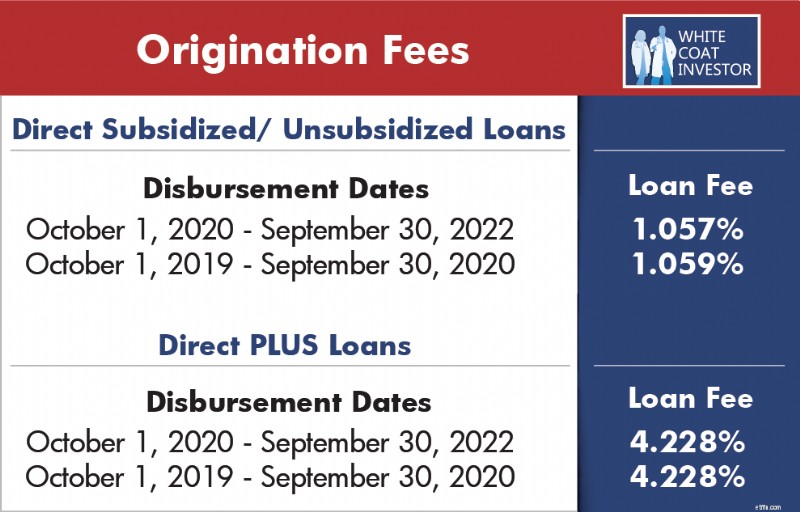
অধিকাংশ ফেডারেল স্টুডেন্ট লোন আপনাকে লোন ফি দিয়ে আঘাত করে যখন বিতরণ করা হয়। স্কুলে ভর্তি হওয়ার সময় আপনি যে ঋণ বিতরণ করেন তা থেকে আনুপাতিকভাবে ফি কেটে নেওয়া হয়। যার অর্থ আপনি যে অর্থ পাবেন তা আপনার ধার করা আসল পরিমাণের চেয়ে কম হবে। এবং, আপনি যে পরিমাণ ধার নিয়েছেন তা পরিশোধ করার জন্য আপনি দায়ী, শুধু আপনি যে পরিমাণ পেয়েছেন তা নয়।
অতীতে, প্রাইভেট স্টুডেন্ট লোনগুলি সাধারণত শুধুমাত্র তখনই ব্যবহার করা হত যখন একজন ঋণগ্রহীতা সর্বাধিক ফেডারেল লোনের সীমাতে পৌঁছান, গ্র্যাড প্লাস লোনগুলি বেশিরভাগ অবশিষ্ট তহবিলের চাহিদা পূরণ করে। 2026 সালের শরত্কালে এবং তার পরে ধার নেওয়া শুরু করা ছাত্রদের জন্য, গ্র্যাড প্লাস লোন আর একটি বিকল্প হবে না, যার অর্থ হল প্রাইভেট লোনগুলি ধার নেওয়ার প্রক্রিয়ার অনেক আগে ব্যবহার করা হতে পারে৷ কিছু নির্দিষ্ট আন্তর্জাতিক মেডিকেল স্কুলে পড়া ছাত্রদের জন্য একটি ব্যতিক্রম রয়ে গেছে যেগুলি ফেডারেল ঋণের জন্য মোটেও যোগ্য নয়, যেখানে ব্যক্তিগত ঋণই একমাত্র বিকল্প হতে পারে।
প্রাইভেট স্টুডেন্ট লোন নেওয়ার সময় Cosigners প্রয়োজন হয় না কিন্তু ঋণগ্রহীতাদের একটি ঋণ সুরক্ষিত করতে এবং আরও ভাল শর্তাবলী পেতে সাহায্য করতে পারে। সহ-স্বাক্ষরকারীদের জন্য কিছু মানদণ্ড অন্তর্ভুক্ত:
একদম শুরুতেই শুরু করা যাক। ছাত্র ঋণে আপনার কতটা নেওয়া উচিত? সত্য হল যে আপনাকে স্নাতক স্কুলের জন্য ধার করতে হবে না, এবং আমি মনে করি যে খুব কমই উচিত। স্নাতক প্রতিষ্ঠানের উপস্থিতির খরচের একটি খুব বিস্তৃত পরিসর রয়েছে, শিক্ষার প্রকৃত মানের পরিসরের চেয়ে অনেক বেশি। কিছু স্মার্ট সিদ্ধান্ত নেওয়ার মাধ্যমে এবং একজন স্নাতক হিসাবে কঠোর পরিশ্রম করে, যারা শেষ পর্যন্ত ডাক্তার হবেন তাদের বেশিরভাগই কোনও স্নাতক ঋণ থাকা এড়াতে পারবেন। আপনার ব্যাচেলরদের ঋণমুক্ত শেষ করার জন্য আপনি যে পদক্ষেপগুলি নিতে পারেন এবং নেওয়া উচিত তার মধ্যে রয়েছে:
আপনি যদি আপনার স্নাতক ডিগ্রির জন্য ধার শেষ করেন তবে শুধুমাত্র ভর্তুকিযুক্ত ঋণ নেওয়ার চেষ্টা করুন। এইভাবে মেডিকেল স্কুল এবং রেসিডেন্সির সময় আগ্রহ তৈরি হবে না। আপনি যদি মেডিকেল স্কুলের জন্য ধার নিচ্ছেন, সেই উদ্দেশ্যে আপনার স্নাতকের সিনিয়র বছরের শেষের দিকে ঋণ নেওয়ার কথা বিবেচনা করুন। শুধুমাত্র সুদের হার কম হবে না (2025-2026 স্কুল বছরের জন্য 6.39% বনাম 7.94%) তবে প্রথম $5,500 ভর্তুকিও দেওয়া হবে৷
আরো তথ্য এখানে:
ঋণ ছাড়াই আন্ডারগ্র্যাড থেকে বেরিয়ে আসুন!
কিভাবে মেডিকেল স্কুলে প্রবেশ করবেন
সর্বোত্তম স্টুডেন্ট লোন হল যা আপনি কখনই নেবেন না। আপনি স্কুলের জন্য যে ঋণ গ্রহণ করেন তা কমানোর জন্য অনেকগুলি কৌশল রয়েছে৷
মেডিকেল এবং ডেন্টাল ছাত্রদের জন্য ফেডারেল ছাত্র ঋণ ধার প্রধান পরিবর্তন হয়েছে যেহেতু ওয়ান বিগ বিউটিফুল বিল আইনটি 2025 সালের জুলাই মাসে আইনে স্বাক্ষরিত হয়েছিল। ফেডারেল গ্র্যাড প্লাস প্রোগ্রামটি 30 জুন, 2026 এর পর থেকে যারা ধার নেওয়া শুরু করবে তাদের জন্য বাদ দেওয়া হবে। প্রায় দুই দশক ধরে, গ্র্যাড প্লাস লোন স্নাতক এবং পেশাদার ডিগ্রিধারী শিক্ষার্থীদের উপস্থিতির সম্পূর্ণ খরচ পর্যন্ত এবং অপ্রত্যাশিত মান প্রত্যক্ষ সীমার বাইরে ধার করার অনুমতি দিয়েছে। এখন, সেই বিকল্পটি আর থাকবে না যারা 2026 সালের পতনে বা তার পরে শুরু করা প্রোগ্রামগুলির জন্য। আপনি যদি আপনার প্রোগ্রামের জন্য সেই তারিখের আগে ধার নেওয়া শুরু করেন, তাহলে আপনাকে পুরানো ধার নেওয়ার নিয়মগুলি মেনে নেওয়া হবে৷
স্নাতক এবং পেশাদার শিক্ষার জন্য ফেডারেল ধার (মেড/ডেন্টাল স্কুল) সরাসরি আন-ভর্তুকিহীন ঋণের মধ্যে সীমাবদ্ধ থাকবে। চিকিৎসা বা ডেন্টাল স্কুলের জন্য $200,000 লাইফটাইম সীমা সহ অ-ভর্তুকিহীন ঋণ প্রতি বছর $50,000 পর্যন্ত সীমাবদ্ধ। স্নাতক স্কুল প্রতি বছর $20,500 সীমাবদ্ধ করা হবে $100,000 এর আজীবন সীমা সহ। সমস্ত ফেডারেল ঋণের (আন্ডারগ্রাড/গ্র্যাড/পেশাদার) জন্য জীবনকালের সীমা হল $257,500৷ অনেক শিক্ষার্থীকে তাদের শিক্ষার খরচ সম্পূরক করার দিকে নজর দিতে হবে প্রাতিষ্ঠানিক এবং প্রাইভেট স্টুডেন্ট লোন থেকে নিম্ন ফেডারেল ক্যাপ সহ।
আরো তথ্য এখানে:
মেডিকেল স্কুলের জন্য অর্থ প্রদানের জন্য আমার কি সামরিক বাহিনীতে যোগদান করা উচিত?
প্রি-মেডস এবং মেডিকেল স্টুডেন্টদের জন্য আর্থিক টিপস
একজন ইন্টার্ন হিসাবে $0 এর নেট ওয়ার্থ
হিট করামেডিকেল স্কুল শেষ হওয়ার পরে, ছাত্র ঋণ ব্যবস্থাপনাকে দুটি বিভাগে ভাগ করা ভাল—ব্যক্তিগত ঋণ এবং ফেডারেল ঋণ .
একটি সাধারণ নিয়ম হিসাবে, ডাক্তাররা তাদের প্রাইভেট স্টুডেন্ট লোন ফেরত দিতে যাচ্ছেন, তাই যে সুদ জমা হয় তা কমিয়ে আনাই মুখ্য। এটি করার সর্বোত্তম উপায় হল আপনি মেডিক্যাল স্কুল থেকে বেরিয়ে আসার সাথে সাথে সেই ছাত্রদের ঋণগুলিকে পুনরায় অর্থায়ন করা। কিছু কোম্পানি আছে যারা "আবাসিক প্রোগ্রাম" অফার করে যেখানে আপনি আপনার সুদের হার কমাতে পারেন এবং অন্যথায় আপনাকে ($0-$100/মাস) করতে হবে তার চেয়ে কম অর্থপ্রদান উপভোগ করতে পারেন। যদিও সেই অর্থপ্রদান লোনের উপর জমা হওয়া সুদকে কভার করে না, আপনি সামগ্রিকভাবে কম সুদ পরিশোধ করবেন কারণ আপনি সুদের হার 6%-10% থেকে কমিয়ে 3%-6% করেছেন৷ নিম্নলিখিত WCI অংশীদাররা বিশেষ আবাসিক ছাত্র ঋণ পুনঃঅর্থায়ন প্রোগ্রাম অফার করে:
লরেল রোড $100/মাস পেমেন্ট
SoFi $100/মাস পেমেন্ট
স্প্ল্যাশ $100/ মাসে পেমেন্ট
প্রাইভেট স্টুডেন্ট লোন লেন্ডাররা সাধারণত রেসিডেন্সির সময় ঋণ পরিশোধের চারটি প্রধান উপায় অফার করে। মনে রাখবেন, যদিও কিছু প্রোগ্রাম আপনাকে স্কুলে থাকাকালীন বিভিন্ন ডিগ্রীতে অর্থপ্রদান স্থগিত করতে দেয়, তবুও আপনি বা আপনার স্কুল যেদিন ঋণ থেকে তহবিল পাবেন সেই দিন থেকে সুদ জমা হবে।
ঋণ বিতরণ থেকে অবিলম্বে অর্থপ্রদান শুরু হয়, এমনকি স্কুলে ভর্তি হওয়ার পরেও। এটি হল চারটি পেমেন্ট বিকল্পের সর্বনিম্ন খরচ যা আপনাকে প্রথম দিন থেকে মূল এবং সুদ উভয়ই পরিশোধ করা শুরু করতে দেয়।
এই প্রোগ্রামে, আপনি শুধুমাত্র স্কুলে ভর্তি হওয়ার সময় সুদ প্রদান করবেন। যদিও ঋণের ভারসাম্য পরিশোধ করা হবে না, আপনি সুদের অর্থ প্রদানের সাথে সাথে থাকবেন এবং বড় পাবেন না আপনার স্কুলে পড়া শেষে ঋণের ব্যালেন্স।
এই বিকল্পের জন্য আপনাকে স্কুলে নথিভুক্ত করার সময় একটি কম নির্দিষ্ট অর্থ প্রদান করতে হবে। রেসিডেন্সির শেষে আপনার একটি বড় লোন ব্যালেন্স থাকবে কিন্তু সামগ্রিক বকেয়া পরিমাণ কমানোর দিকে অগ্রগতি হবে।
আপনি যদি সম্পূর্ণভাবে পিছিয়ে দেওয়ার সিদ্ধান্ত নেন, তাহলে আপনাকে স্কুল চলাকালীন প্রয়োজনীয় কোনো অর্থপ্রদান করতে হবে না—স্নাতকের পর 6 মাসের গ্রেস পিরিয়ড সহ। এটি চারটি পেমেন্ট বিকল্পের মধ্যে সবচেয়ে ব্যয়বহুল।
অনেক ফেডারেল স্টুডেন্ট লোন গ্রহীতা লোন পরিশোধের জন্য একটি স্ট্যান্ডার্ড 10-বছরের পেমেন্ট প্রোগ্রামে নাম নথিভুক্ত করে – 10 বছরে 120টি নির্দিষ্ট পেমেন্টে আপনার ঋণ পরিশোধ করে। ঋণের পরিমাণ এবং সুদের হারের উপর ভিত্তি করে এই মাসিক অর্থপ্রদানগুলি, 6-অঙ্কের ঋণ সহ একজন সাধারণ নিম্ন-আয়ের বাসিন্দা যা বহন করতে পারে তার থেকে অনেক বেশি। আয়-চালিত পরিশোধ (IDR) প্রোগ্রামগুলি হল অর্থপ্রদানের পরিকল্পনা যা ঋণগ্রহীতাদের আয় এবং পরিবারের আকারের উপর ভিত্তি করে তাদের ঋণ পরিশোধ করার অন্যান্য বিকল্পগুলিকে অনুমতি দেয়৷
IDR প্রোগ্রামগুলি বাসিন্দাদের জন্য অত্যন্ত উপকারী, যারা আক্ষরিক অর্থে তাদের ছাত্র ঋণে মানক অর্থ প্রদানের সামর্থ্য রাখে না। বিবেচনামূলক আয়ের শতাংশের উপর ভিত্তি করে অর্থপ্রদানের সাথে, মাসিক বকেয়া পরিমাণ $0 এর মতো কম হতে পারে তবে $100-$400 সীমার মধ্যে এটির সম্ভাবনা বেশি। IDR প্ল্যানের সাথে সঙ্গতিপূর্ণ থাকার জন্য বছরে একবার আপনাকে আয় (সাধারণত ট্যাক্স রিটার্ন জমা বা পে স্টাব জমা) প্রত্যয়িত করতে হবে।
এছাড়াও, IDR প্রোগ্রামগুলি ফেডারেল লোন মাফ প্রোগ্রাম যেমন পাবলিক সার্ভিস লোন ফরিভনেস (PSLF) এবং দীর্ঘমেয়াদী আয়-চালিত পরিশোধের ক্ষমার জন্য যোগ্য পরিশোধের প্রোগ্রাম।
কিছু IDR প্ল্যানের একটি বড় নেতিবাচক দিক হল অর্জিত সুদ কভার করতে অক্ষমতা। প্রদত্ত যে একটি $200,000, 6% ছাত্র ঋণ প্রতি মাসে $1,000 সুদে জমা করে, IDR পেমেন্ট সাধারণত এমনকি জমা হওয়া সুদকে কভার করার কাছাকাছিও আসে না, এমন একটি ঋণ ছেড়ে যায় যা বসবাসের সময় আকারে বাড়তে থাকবে। পরবর্তীতে আমরা ঋণ পরিশোধ সহায়তা পরিকল্পনা (RAP) নামে IDR প্ল্যান প্রবর্তন করব, যা সুদে ভর্তুকি দেয়।
IDR প্রোগ্রাম ফেডারেল স্টুডেন্ট লোন ম্যানেজমেন্টে প্রচুর পরিমাণে জটিলতা যোগ করে। একজন ঋণগ্রহীতার জন্য সবচেয়ে সাশ্রয়ী মূল্যের অর্থপ্রদানের জন্য উপলব্ধ বিকল্পগুলিকে বোঝা অত্যাবশ্যক, ন্যূনতম পরিমাণ সুদ, এবং ক্ষমার সর্বোচ্চ স্তর। ফেডারেল সরকার পর্যায়ক্রমে আয়-চালিত পরিশোধের (IDR) পরিকল্পনা পরিবর্তন করে, অতি সম্প্রতি OBBBA-এর মাধ্যমে জুলাই 2025 সালে আইনে স্বাক্ষরিত।
অনুগ্রহ করে মনে রাখবেন যে কোনো IDR প্রোগ্রামের সাথে আপনার আয় না থাকলেও আপনি মেড স্কুলের শেষ বছরে ট্যাক্স রিটার্ন দাখিল করতে চাইবেন। এটি আপনাকে যেকোনো IDR প্ল্যানে আপনার প্রথম বছরে খুব কম অর্থপ্রদান (~$0-$10) করার অনুমতি দেবে।
ইনকাম কন্টিনজেন্ট পেমেন্ট বা আইসিআর সত্যিই একটি উত্তরাধিকার প্রোগ্রাম। আমি খুব কমই এই প্রোগ্রামে নথিভুক্ত একজন ডাক্তারের সাথে যোগাযোগ করেছি। আইসিআর-এ পেমেন্ট আপনার বিবেচনার আয়ের 20%। অন্যান্য প্রোগ্রামের তুলনায় আইসিআর-এর একটি সুবিধা হল যে এটি একত্রিত হওয়ার পরে প্যারেন্ট প্লাস লোনের সাথে ব্যবহার করা যেতে পারে। আপনার পিতামাতার ঋণ না থাকলে, আপনি সম্ভবত অন্যান্য আয়-ভিত্তিক অর্থপ্রদান প্রোগ্রামগুলির মধ্যে একটি খুঁজে পাবেন (নীচে আলোচনা করা হয়েছে) ICR থেকে আরও ভাল অর্থপ্রদানের বিকল্পগুলি অফার করে৷
অনুগ্রহ করে নোট করুন , এই পেমেন্ট প্রোগ্রামটি OBBBA এর কারণে 2028 সালের গ্রীষ্মে সূর্যাস্ত হবে। সেই সময়ে, আপনাকে আরেকটি IDR প্ল্যান দেখতে হবে। আপনি যদি একজন অভিভাবক ঋণগ্রহীতা হন যিনি শুধুমাত্র ICR প্ল্যানের জন্য যোগ্য হন, আপনি ICR প্ল্যানে একটি পেমেন্ট করতে পারেন এবং তারপরে আরও সুবিধাজনক IBR প্রোগ্রামে যেতে পারেন৷
যোগ্যতা :কোন আংশিক আর্থিক কষ্টের প্রয়োজন নেই এবং আপনার লোন প্রথম কোন তারিখে ইস্যু করা হয়েছিল তা বিবেচ্য নয়৷৷
কার বিবেচনা করা উচিত৷ :অভিভাবক ঋণগ্রহীতা
আয়-ভিত্তিক পরিশোধ (IBR) একটি নতুন এবং উন্নত ICR ছিল। প্রধান বৈশিষ্ট্য হল:
যোগ্যতা :পূর্বে, IBR পরিকল্পনার একটি আয়ের প্রয়োজন ছিল যাকে বলা হয় আংশিক আর্থিক কষ্ট। OBBBA পাশ করার সাথে সাথে এই নিয়মটি পর্যায়ক্রমে বাতিল করা হয়েছিল। ঋণগ্রহীতারা যেকোন আয় বা ঋণে IBR-এ নথিভুক্ত করতে পারেন।
পুরাতন IBR সেই ঋণগ্রহীতাদের ক্ষেত্রে প্রযোজ্য যাদের 1 জুলাই, 2014-এর আগে অন্তত একটি ফেডারেল ছাত্র ঋণ আছে৷
নতুন IBR সেই ঋণগ্রহীতাদের ক্ষেত্রে প্রযোজ্য যারা হয় 1 জুলাই, 2014-এ বা তার পরে ফেডারেল ছাত্র ঋণ নেওয়া শুরু করেছেন, অথবা যারা সেই তারিখে বা তার পরে একটি নতুন ঋণ নেওয়ার আগে সমস্ত পূর্বের ফেডারেল ঋণ সম্পূর্ণরূপে পরিশোধ করেছেন৷
কার বিবেচনা করা উচিত৷ :দ্বৈত আয়ের ঋণগ্রহীতা এবং যারা ঋণ মাফের জন্য যাচ্ছেন। যাইহোক, যদি আপনি পুরানো IBR-এর জন্য যোগ্য হন, তাহলে আপনি কম মাসিক অর্থপ্রদানের জন্য নীচে আলোচনা করা PAYE বা RAP পরিকল্পনাগুলি বিবেচনা করতে চাইতে পারেন৷
পে অ্যাজ ইউ আর্ন একটি নতুন এবং উন্নত আইবিআর। PAYE এর প্রধান বৈশিষ্ট্যগুলির মধ্যে রয়েছে:
অনুগ্রহ করে নোট করুন , এই পেমেন্ট প্রোগ্রামটি OBBBA এর কারণে 2028 সালের গ্রীষ্মে সূর্যাস্ত হবে। সেই সময়ে, আপনাকে আরেকটি IDR পরিকল্পনা দেখতে হবে।
যোগ্যতা :একটি আংশিক আর্থিক কষ্ট প্রয়োজন. তাই আপনি অংশগ্রহণ করার আগে নিশ্চিত করুন যে আপনি PAYE-তে নথিভুক্ত হয়েছেন।
To qualify for PAYE, you must have taken out your first federal loan after September 30, 2007, and received a loan disbursement after September 30, 2011.
FFEL loans are not eligible for PAYE unless they are consolidated through a direct federal consolidation loan.
Who Should Consider :Dual-income borrowers and those going for loan forgiveness.
Learn more about partial financial hardship
Learn more about interest capitalization
The Repayment Assistance Plan (RAP) was created by OBBBA in July 2025. The plan is supposed to be available July 1, 2026. Here's the main features:
Eligibility: Any borrower with direct federal student loans.
Who Should Consider :Borrowers with student debt that exceeds their income and/or those considering loan forgiveness.
The Saving on a Valuable Education (SAVE) program was introduced in the summer of 2023 replacing the old Revised Pay As You Earn (REPAYE) Program. The program ultimately ended in December 2025, following the resolution of a long-standing lawsuit brought by the state of Missouri. That litigation, which began in the summer of 2024, placed approximately seven million SAVE borrowers into a processing forbearance. Initially, the forbearance paused both payments and interest accrual through August 2025; once interest resumed, many borrowers began evaluating alternative repayment options for their federal student loans. Eventually all those still in SAVE will be forced to select another IDR plan or be automatically moved.
Partial Financial Hardship (PFH) is an eligibility requirement under the Pay As You Earn Repayment (PAYE) plan. In order to qualify, your monthly payment in PAYE must be lower than the standard 10-year repayment plan. If your payment in PAYE is above the standard 10-year payment, you do not qualify for a PFH,
However, if you’ve enrolled in PAYE while you qualified for a PFH you can continue in the plan even if your income grows and would make you ineligible thereafter. This is very common when income jumps as trainees become attendings.
Resident income = $60K
Student loan debt = $300K
Interest rate = 7%
Household size = 1
Standard 10 year payment = PMT(7%/12,120,300000,0,0) =$3,483
PAYE monthly payment = $60K – $23,940 =$36,060 × 10% =$3,606 / 12 =$301
The payment cap is $3,483 for this borrower. The monthly payment in PAYE is below the standard 10 year payment and eligible for a partial financial hardship.
Attending income = $450K
Student loan debt = $300K
Interest rate = 7%
household size = 1
Standard 10 year payment = PMT(7%/12,120,300000,0,0) =$3,483
PAYE monthly payment = $450K – $23,940 =$426,060 × 10% =$42,606 / 12 =$3,551
The monthly payment in PAYE has passed the standard 10 year payment due to the large increase in income as attending. Since the monthly payments are higher than the standard 10 year payment this borrower no longer qualifies for a partial financial hardship. They are no longer able to enroll into PAYE.
However, if the borrower enrolled in PAYE as a resident or before income has jumped, they are able to stay in the program as long as they don’t switch repayment plans.
Attending income = $441,900
Student loan debt = $300K
Interest rate = 7%
household size = 1
Standard 10 year payment = PMT(7%/12,120,300000,0,0) =$3,483
PAYE monthly payment = $441,900 – $23,940 =$417,960 × 10% =$41,796 / 12 =$3,483
The breakpoint is reached when your payment in PAYE equals the Standard 10 year payment.
Interest capitalization occurs when unpaid interest is added to the principal amount of your federal student loans. This increases the principal balance on the loan. The interest rate is now charged on that higher principal balance increasing the overall cost of the loan.
Principal balance = $200K
Accrued interest = $50K
Total balance = $250K
Interest rate = 7%
Annual interest charge = $200K × 7% =$14K
Principal Balance = $250K
Accrued Interest = $0
Total Balance = $250K
Interest Rate = 7%
Annual interest charge = $250K × 7% =$17.5K
After the accrued interest of $50K capitalizes the annual interest charge will increase by $3.5K
Interest capitalization can be inevitable, but should be avoided when possible. Here's when this happens:
In addition to the more well-known Public Service Loan Forgiveness (PSLF) program, several of the IDR programs have their own forgiveness programs. Remember none of these federal programs have anything to do with private or refinanced loans.
আরো তথ্য এখানে:
How to Receive Student Loan Forgiveness
The IBR forgiveness program requires 20 to 25 years of payments, but you may make them while working for any employer or not working at all. New IBR is over 20 years and Old IBR is 25 years. There are two issues with this forgiveness program.
First, most physicians will have paid off their loans completely in less than 20/25 years because after they finish training, their payments will be equal to those under the standard 10-year repayment program. Perhaps that would not be the case for a very poorly paid physician with a very high student loan burden (3,4,5x their income), but for most, there just won't be anything left to forgive.
Second, the forgiveness is taxable, and after 20/25 years, the “tax bomb” could grow to as much or more than the original debt, at least on a nominal (non-inflation adjusted) basis.
PAYE offers forgiveness after just 20 years. However, it is still fully taxable at your ordinary income tax rate in the year you receive forgiveness. PAYE is being phased out in summer 2028, so if you are hitting forgiveness after that date you need to look at IBR or RAP as an alternative. And depending on when you started borrowing, you could end up with more years of payment and a higher monthly payment.
RAP has a generous interest subsidy but is the longest IDR forgiveness track at 30 years. RAP would likely have a lower loan balance leftover for the tax bomb versus PAYE and IBR, but is really only going to work out if you have massive loans as compared to your income. And, do you really want to carry your loans around until you reach your 60s?
Staying up to date on IDR forgiveness can be tough, especially since the timeline can span decades. Temporarily, there was a tracker on studentaid.gov, but the Department of Education took it down. Rather than relying on back of the envelope math, here's a hack that can show you an estimated payment count on your IDR plan.
Public Service Loan Forgiveness is the granddaddy of the federal forgiveness programs and the only one most doctors should be looking at. Not only does it offer tax-free forgiveness, but it also offers it after just 10 years of payments. If you make a bunch of tiny IBR, PAYE, or RAP payments during your training, you may only have to make 3-7 years of “full” payments as an attending before having the rest forgiven. There is a catch, however. You have to be directly employed full-time by a non-profit (501(c)(3)) while making all of those payments in an eligible payment program—or they don't count. You also have to make sure you can prove you made all of those payments since the federal student loan servicing companies have a nasty habit of not being able to count payments accurately.
আরো তথ্য এখানে:
Public Service Loan Forgiveness
Dave Ramsey's Bad Advice About PSLF
Many residents are tempted to put their student loans into deferment or forbearance during residency and/or fellowship. This is almost always a mistake. Nothing makes me cry more than to run into a doctor who should only be 2-3 years away from receiving PSLF who had their loans in forbearance during a lengthy training period. I hate breaking the news to them that they've basically thrown away a benefit worth hundreds of thousands of after-tax dollars. It's like working for a year or two as a doctor without being paid at all. Deferment is slightly better than forbearance for some people, but they are both very similar for most high-income professionals with loans—you make no payments but the debt continues to grow, sometimes very quickly.
Deferments are granted in six-month increments by your loan servicer and subsidized loans don't accrue interest. Unsubsidized loans both accrue and capitalize interest. There are several reasons you can get a deferment, but the main one most residents would use is economic hardship, which is limited to just three years. Other reasons include active-duty military, unemployment, and going back to school.
With forbearance, interest accrues on both subsidized and unsubsidized loans. Just think of it as a 12-month pause on payments. For most medical students, it is no less attractive than deferment and it is easier to get. There are two types of forbearance.
I tell you about these two programs and give you these links because people wonder about them, not because I think people should actually use them. If you are seriously considering deferment or forbearance, you would almost surely be better off with an IDR plan. Not only would your payments count toward possible forgiveness down the road, but they may be as low as $0 a month anyway. In RAP, if your payments don't cover all the interest, all of that interest is forgiven by the government and is NOT added back on to the loan amount.
Let's summarize what to do with your student loans if you are a resident. The sooner you know if you are going for PSLF, the easier your decisions become. If you are single, or the sole earner in a married couple, it can also be very easy. But many people would benefit from getting formal advice from a specialist in student loan management. If you are married to another earner and one or both of you is going for PSLF, consider shelling out $400-$700 one-time fee as an intern to get advice. It could save you tens, or even hundreds of thousands of dollars. It is relatively easy for them to identify the red flags that indicate you're doing things wrong and they can help you run the numbers to make the difficult student loan management decisions that involve choosing an IDR program, choosing how to file your taxes, and even choosing whether to use a traditional or Roth IRA or 401(k).
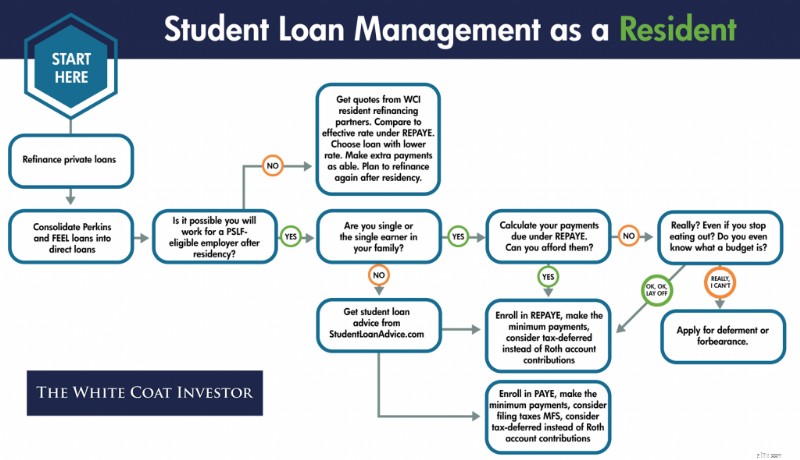
In contrast to residency, where student loan management can be very complicated, involving your taxes and even your retirement account contributions, management as an attending is generally very simple.
Your private loans, which you probably should have refinanced in residency, can be refinanced again and again as long as you can get a lower rate (and you usually can as a new attending). Obviously, refinancing doesn't actually make them go away, but it helps make more of your monthly payments go toward principal instead of interest. The way you make them go away is by living like a resident and dumping a huge sum on them every month. Even half a million in student loans doesn't last long against a five-figure monthly payment assault.
Regarding your direct federal loans, you need to finalize your decision of whether to go for PSLF or not. This is usually relatively easy. If you can answer BOTH of the following questions positively, you should go for PSLF:
If you cannot answer both of those questions positively, refinance your student loans and live like a resident for 2-5 years until they are gone.
আরো তথ্য এখানে:
10 Reasons to Pay Off Your Student Loans Quickly
How Fast Can You Get Out of Debt?
The X Factor
What Does Live Like a Resident Really Mean?
Here are the best deals on student loan refinancing I've managed to negotiate with the top student loan refinancing lenders:
The secret to refinancing your student loans is to do it early and often. If you ask your fellow White Coat Investors for their regrets, many say they wish they had done it earlier because it was much easier than they thought. While it may appear intimidating at first, most of the companies will give you an accurate estimate of the rate you will eventually receive in 2 minutes online. You'll need to gather and submit some paperwork, but it's mostly all the same for all of the companies. So once you gather it and submit it to one, it is very easy to submit it to 2 or 3 more (or even all of them). Then just take the one that offers the lowest rate.
The rates offered to you will depend on your credit score, your debt-to-income ratio, and your desired loan terms. Unlike the federal government, which loaned you money just for getting into school, these private companies actually want to make a profit. They only want to loan money to people they think will be able to pay the money back.
The best way to get the lowest rate is to accept a 5-year term and a variable rate. If you are willing to live like a resident for 2-5 years after residency and pay off your loans quickly, these terms should be acceptable to you. While there is some legitimate fear of rising rates with a variable rate loan, the truth is that rates have to rise dramatically and/or early in the term in order for you to come out behind with a variable rate loan. If you can afford the worst-case scenario, I would at least consider a variable rate loan, and run the math under various interest rate scenarios.
Think of a fixed-rate loan as a variable rate loan plus an interest rate insurance policy. Since you should only buy insurance against financial catastrophes, someone planning to throw $10K a month at their loans every month for 2 years should not pay extra for a fixed rate. Just having a little more of your payment go to interest instead of principal for a few months is not a catastrophe. Even if rates rise early and dramatically, it will likely only delay paying the loan off by a month or two for someone truly committed to getting rid of them.
Some doctors fear refinancing because they are worried about what will happen to them if their income drops, if they die, or if they become disabled. This is a good reason to avoid putting a co-signer on your loans, but if you read the fine print you will see that most private companies have some accommodations for these situations. Often they will give you up to a year without payments in difficult situations (although the interest will continue to build). Loans are also often forgiven at death and sometimes even for disability. Be sure to read the fine print before signing on the bottom line so you know what to expect if any of these unlikely situations happen to you. Even if the company does NOT offer a death or disability plan, realize that purchasing enough term life insurance or disability insurance to cover the loans or its payments is likely cheaper than paying the extra interest in the government programs!
A lot of people get confused about loan consolidation, and in fact, use the term consolidating when they mean refinancing.
Consolidating generally means taking a bunch of loans and making one loan out of them. While that may increase the convenience of management, it does not actually reduce the interest rate. In fact, it may increase it. With federal loans, the weighted average of your loans is taken and rounded UP to the nearest 1/8th of a percentage point. You can consolidate your loans with the federal government, but to refinance them you must go to a private company and lose the benefits of federal loans such as the income-driven repayment programs and the forgiveness programs.
So why would anyone consolidate their loans if it increases your interest paid? Aside from the benefit of only having one loan to manage, the main reason is that you can turn some loans that were NOT eligible for IDR plans and PSLF into loans that are. The classic examples are Federal Family Education Loans (FFEL) and Perkins loans. By themselves, they are not eligible for those programs, but if consolidated into a direct loan, they become eligible. If you fall in this situation and want to use the IDR or PSLF programs, consolidate here.
Another reason to consolidate your loans is when you’re fresh out of med school and enrolling in IDR. Consolidation would allow you to opt-out of your grace period and begin making payments 3-4 months earlier. However, it can be a huge mistake for those who’ve been in training for a couple of years or attendings. Payment history is completely wiped out when you complete a direct federal consolidation—meaning those 3 years you’ve done to PSLF would be gone and you’d be starting over. I can’t tell you how many emails I’ve received from docs who’ve done this and were just a few years out from PSLF. Only to have the rug pulled out from them.
Things are a little more complicated for attendings who wish to go for Public Service Loan Forgiveness. These are generally academicians, or at least people who are willing to be academicians for a few years at the beginning of their careers. However, working for the military or the Veterans Administration or other government agencies can also count. There are also a few non-profits out there who directly employ their docs who should qualify for PSLF. Often these jobs pay less than a private practice job, so you need to take into account that sometimes you would be better off with a better paying job and paying off your loans, then going for forgiveness.
The big downside of going for PSLF is that you cannot refinance your loans. Only direct federal loans can be forgiven. So in the event that legislative or regulatory risk rears its ugly head, changing the program, or that you simply change your career goals such that you no longer qualify for it, you will end up paying more interest than you otherwise would have. But for those who stand to get tens of thousands forgiven, I think it is worth running those risks.
In order to maximize how much is forgiven under PSLF, you want to make as many tiny loan payments as possible. That means getting started as soon as possible, and that may be even earlier than you think. The more time you spend in training, the more you stand to have forgiven. If you spend 5 years in a surgery residency, then do a one-year burn fellowship and a one-year trauma fellowship, you may only make three years of “full” attending-size payments, leaving the vast majority of your debt to be forgiven, tax-free.
When going for PSLF, you must continue to make payments in an eligible program. For up to a year after leaving residency, those might still be relatively small payments, further increasing the amount eligible to be forgiven. But eventually, as an attending, you'll be making “real” four-figure payments toward your loans. At this point, IBR or PAYE might be the best program to be in because of the cap on the payments at the standard 10-year repayment program amount. That means if you were using RAP during residency and/or fellowship, you might want to switch to PAYE/IBR. Mortgage-sized student loan payments will start quickly as you juggle several competing financial priorities:
However, it is probably worth it. Of course, if you were in a situation in residency where you weren't going to qualify for a significant RAP subsidy anyway (usually due to a high-earning spouse), you should just use PAYE (or IBR if ineligible for PAYE) instead of RAP all the way through. But remember, under RAP, you could file under Married Filing Separately to avoid having to use the income of your high-earning spouse.
Another major complaint of those going for PSLF is that the student loan servicing companies such as MOHELA provide terrible service. Make sure you stay on top of everything. Not only do you need to be an expert at the requirements of the PSLF program (which of your loans qualify, which repayment programs have payments that qualify toward the 120 required monthly payments, and working full-time for a 501(c)(3)), but you must keep track of all the paperwork, including evidence of every single payment AND a copy of your annual certification forms. The certification is now done electronically (highly recommend over the paper form) and tracked through the studentaid.gov dashboard. Remember, you could end up going to court with the government in order to receive your promised forgiveness. Make sure you have the evidence you need.
In addition, you cannot just assume you will receive forgiveness. Not only could the program change and you not be grandfathered in, but your employment plans may simply change. Going for PSLF does NOT excuse you from living like a resident for 2-5 years out of residency. However, instead of sending those big 4-5 figure payments to your federal loan servicer, you need to send them to yourself. To your investment accounts, to be specific, creating a “PSLF Side Fund.” This way, even if PSLF doesn't happen for you, you're not behind the eight ball.
Hopefully by living like a resident you've been able to max out your retirement accounts AND save this side fund up in a taxable account, and you can simply liquidate the taxable account and use the proceeds to pay off the loans. But even if most of that savings ends up in retirement accounts and you can't (or don't want) to immediately eliminate the loans at that point, at least your net worth will be where it should be.
Let's summarize what to do with your student loans as an attending. Private loans should be refinanced whenever possible and paid off quickly by living like a resident. Federal loans should also be refinanced and paid off quickly unless you are directly employed by a 501(c)(3) AND made a lot of tiny payments during your training.
Remember that SAVE has been eliminated 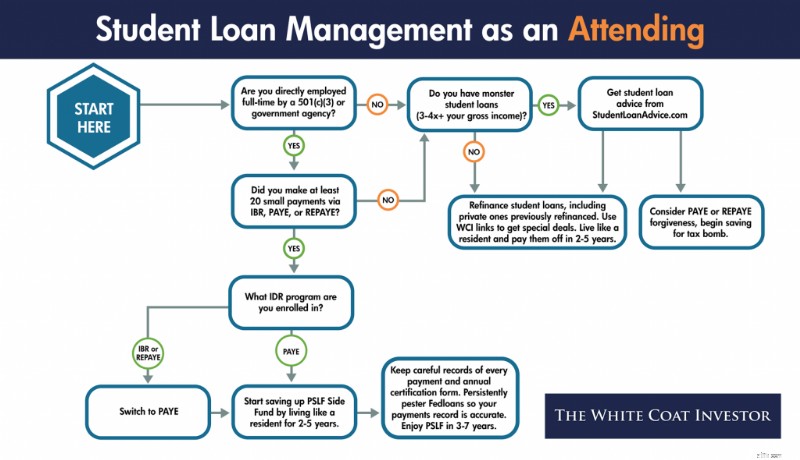
If you die or are disabled, what happens with your private loans will be dictated by the terms on their promissory notes. Worst case scenario, if you die they are assessed against your estate. Your parents or siblings etc are never responsible for your loans, but your heirs could be indirectly.
In the event of death, your federal loans are discharged. With Parent Plus loans, the loans are discharged if the student OR the borrower dies.
In the event of permanent disability, federal loans are also forgiven. In a temporary disability, however, you may be limited to use of the IDR programs, deferment, or forbearance.
Student loans generally survive bankruptcy, meaning you cannot wipe them out simply by declaring bankruptcy. However, if you can prove undue hardship, you may be able to have them discharged. Defining undue hardship is going to be up to the judge, but I can assure you that if you qualify for it, you're going to be in a terrible place financially either way.
Depending on what happens to your loans at death and disability, consider carrying a little extra term life and disability insurance coverage to make up for it.
In the event of school closure you may be able to have your loans discharged. This tends to come up more in for-profit institutions, but it’s very rare.
In the event of the school falsely certifying your eligibility to receive a loan, you may be eligible for loan discharge. But this is very complex and unusual.
Some people with low-interest rate student loans wonder if they should really pay their loans off rather than invest. While it is intuitively attractive to borrow at a low rate and earn at a higher rate, this decision often ignores two factors.
The first is that most people simply don't invest the difference. Behaviorally, it is more difficult to maintain focus on building wealth once you have decided to make minimum payments and end up spending the money instead of investing.
The second is that an investment that provides a rate of return higher than the guaranteed return available by paying off your loans usually involves significant risk of loss. However, if you would like to carry your loans a little longer in order to invest inside retirement accounts, I think that's okay. But I would still plan to have them paid off within five years of finishing training. The financial muscles you develop paying off your loans quickly are the same ones you will use to build wealth toward financial independence afterward. I do not recall ever meeting a physician who regretted paying off their student loan quickly. In fact, most express a feeling of massive relief such as this email I received a few days ago from a two doctor couple who paid off over $700,000 in student loans in 16 months:
This student debt problem is so huge and overwhelming. I had many poor nights of sleep during training fretting about, “How do we pay off this 3/4 million dollar debt?” I feel now an immense stress has been lifted. We can now go forward and make some real decisions about how we want to live out the rest of our lives.
You can slay the student loan dragon. Sit down and get started today. Figure out where you stand; list out your loans by amount owed, payment, and interest rate and add up the total. Then start working on a plan to handle them. You can do it, the entire White Coat Investor Community is rooting for you!
আরো তথ্য এখানে:
Pay Off Debt or Invest?
What's Your Investment-to-Debt Ratio?
Student loans and the many programs and options are challenging to navigate. If you need help, look to StudentLoanAdvice.com, a WCI company that helps the average client save $160,000 in loans! Check it out today!
আপনি কি মনে করেন? What other information belongs in the ultimate guide to managing physician student loans? Have you paid off your loans? What other advice do you have about them for your fellow White Coat Investors?